
For entrepreneurs looking to enter this expanding market, a photography franchise India opportunity offers a structured and lower-risk path compared to starting independently.
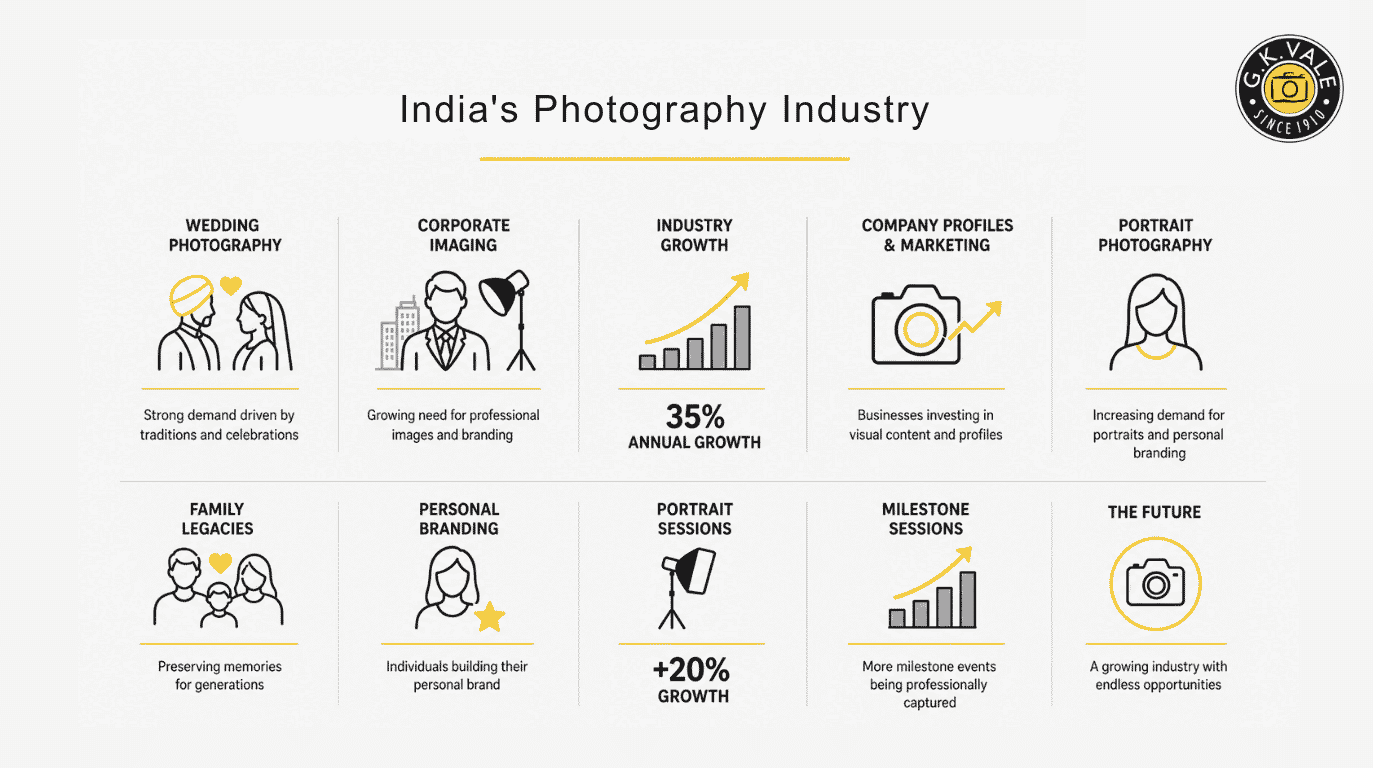
India's photography industry is growing steadily, driven by rising disposable incomes, destination weddings, social media culture, corporate branding needs, and increasing demand for professional portraits and imaging services. The market is no longer limited to weddings alone; today, customers also expect high-quality studio portraits, executive headshots, product photography, event coverage, and branded visual content.
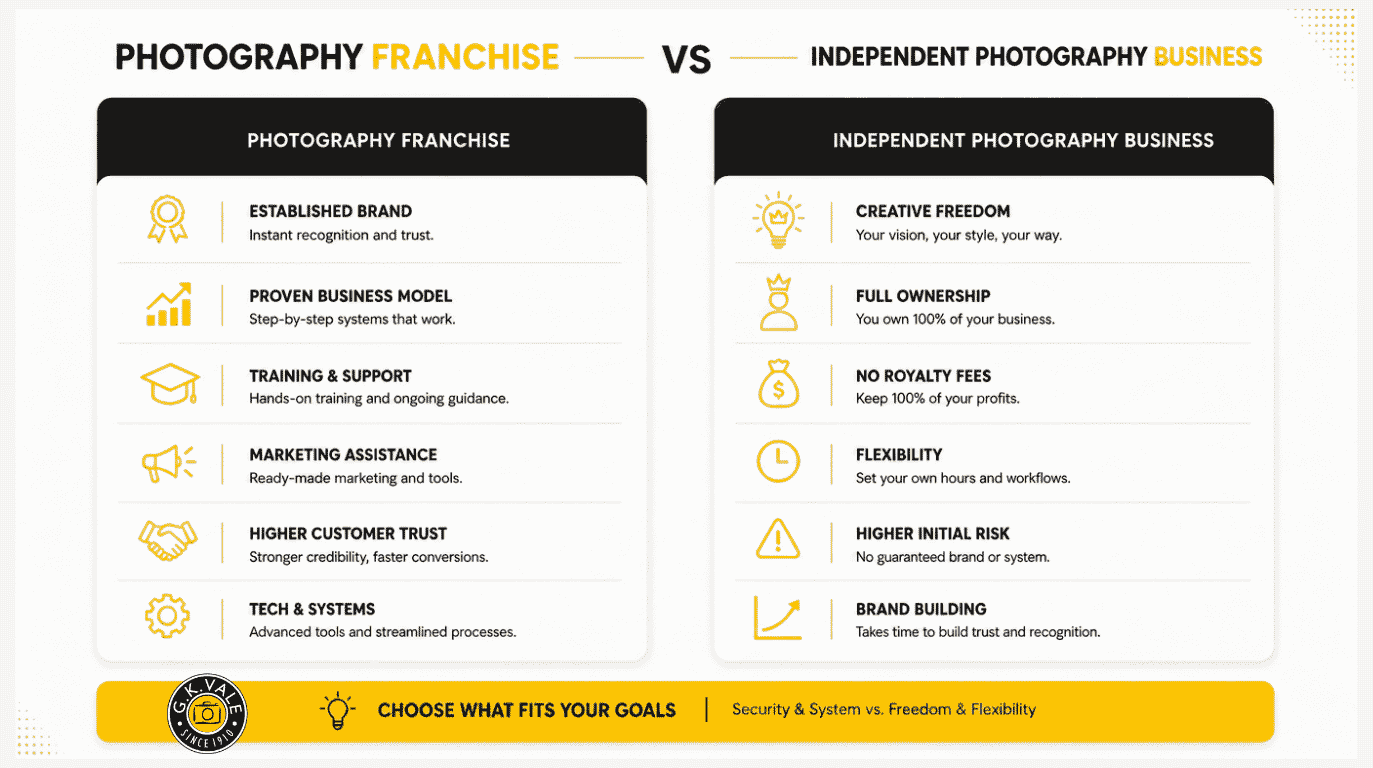
A photography franchise allows entrepreneurs to operate under an established brand name while leveraging proven business systems, training, technology, and marketing support. Instead of building a business from scratch, franchise owners benefit from an existing reputation, standardized processes, and a trusted customer experience.
Brands with a strong legacy and corporate presence, such as G.K Vale Corporate, show how trust, consistency, and service quality can create long-term value in the photography business.
This guide explains everything you need to know about starting a photography franchise in India, including investment requirements, brand selection, revenue potential, and why established brands often outperform new entrants.
What is a Photography Franchise?
A photography franchise is a business arrangement where an entrepreneur purchases the rights to operate under an established photography brand in a specific territory.
How Does the Franchise Model Work?
In a franchise model, the franchisor provides:
- Brand name and trademarks
- Business processes and SOPs
- Staff training
- Marketing support
- Technology platforms
- Photography workflows
- Ongoing operational assistance
The franchisee invests capital, manages daily operations, and pays franchise fees or royalties based on agreed terms.
Types of Photography Franchises in India
Different franchise formats cater to different market segments.
1. Portrait Photography Franchise
These focus on:
- Family portraits
- Baby photography
- Corporate headshots
- Graduation portraits
2. Wedding Photography Franchise
These primarily target:
- Weddings
- Pre-wedding shoots
- Engagement ceremonies
- Destination weddings
3. Corporate Photography Franchise
These are designed for business and institutional clients and may include:
- Executive portraits
- Team headshots
- Product photography
- Corporate events
- Branding and campaign shoots
4. Commercial Photography Franchise
These are specialized in:
- Product photography
- Fashion shoots
- Corporate campaigns
- Advertising assignments
5. Studio-Based Photography Franchise
These operate from dedicated studios offering:
- Portrait sessions
- Passport photos
- Printing services
- Photo restoration
6. Mobile Photography Franchise
These operate without a permanent studio and focus on on-location services.
Benefits of Buying a Franchise Instead of Starting Independently
Key advantages include the following:
- Faster business launch
- Established customer trust
- Proven operating systems
- Lower trial-and-error costs
- Continuous training and support
- National marketing support
- Access to advanced technology
- Better brand recall in competitive markets
Brands like G.K Vale are especially relevant because they demonstrate how a photography business can serve both retail and corporate customers with a consistent, premium experience.
Photography Franchise India: Investment Required – Setup Cost Breakdown
Understanding the photography franchise cost India entrepreneurs should expect is crucial before investing.
One-Time and Initial Setup Costs
| Expense Category | Estimated Cost Range |
|---|---|
| Franchise Fee | ₹5 lakh – ₹25 lakh |
| Cameras & Equipment | ₹8 lakh – ₹30 lakh |
| Studio Interiors | ₹5 lakh – ₹20 lakh |
| Computers & Software | ₹2 lakh – ₹8 lakh |
| Lighting & Backdrops | ₹2 lakh – ₹10 lakh |
| Inventory & Printing Materials | ₹1 lakh – ₹5 lakh |
| Marketing Launch Budget | ₹1 lakh – ₹5 lakh |
| Staff Hiring & Training | ₹2 lakh – ₹6 lakh |
| Working Capital (3–6 months) | ₹5 lakh – ₹15 lakh |
Detailed Investment Categories
Franchise Fee
Most brands charge a one-time franchise fee covering the following:
- Brand licensing
- Initial training
- Territory allocation
- Launch support
Equipment Investment
Essential equipment includes:
- DSLR or mirrorless cameras
- Lenses
- Studio lighting systems
- Flash equipment
- Editing workstations
- Licensed editing software
Studio Space and Interiors
Studio costs depend on city and location.
Typical requirements:
- 1,000–3,000 sq. ft.
- Reception area
- Shooting floors
- Editing rooms
- Customer consultation area
A premium brand experience, similar to what customers expect from established names like G.K Vale Corporate, often requires polished interiors and a professional customer journey.
Total Investment Ranges
Budget Setup – ₹20 lakh – ₹35 lakh
Suitable for smaller cities.
Mid-Range Setup – ₹35 lakh – ₹60 lakh
Ideal for Tier 2 cities.
Premium Setup – ₹60 lakh – ₹1.5 crore+
Suitable for premium urban locations.
Financing Options Available in India
Entrepreneurs can explore:
- Bank business loans
- MSME loans
- NBFC financing
- Franchise-specific funding programs
- Mudra loans (eligible businesses)
How to Choose the Right Franchise Brand
Understanding how to start a photography franchise successfully begins with selecting the right partner.
1. Evaluate Brand Reputation
Research:
- Years in business
- Customer reviews
- Industry recognition
- Existing franchise network
- Corporate and retail client portfolio
Established brands with decades of presence often offer greater stability and stronger customer trust.
2. Assess Training and Support
Ask:
- Is technical photography training provided?
- Is business training included?
- Is staff training ongoing?
- Is support available for both retail and corporate services?
3. Review Technology Infrastructure
Modern franchises should provide the following:
- CRM systems
- Booking software
- Editing workflows
- Customer communication platforms
- Digital asset management tools
4. Check Territorial Exclusivity
Ensure your agreement clearly defines:
- Exclusive operating areas
- Expansion rights
- Online sales policies
- Corporate lead allocation, if applicable
5. Understand Royalties and Fees
Clarify:
- Monthly royalties
- Marketing contributions
- Technology fees
- Renewal charges
Questions to Ask During Franchise Discovery
- What is the average franchise break-even period?
- What support is provided post-launch?
- Can existing franchisees be contacted?
- What are annual renewal costs?
- What marketing support is included?
Red Flags to Watch Out For
- Unrealistic revenue promises
- Lack of financial disclosures
- No existing franchise success stories
- Weak training programs
- Vague contracts
Revenue Potential in Indian Cities
Revenue potential varies significantly by geography.
Tier 1 Cities
Examples: Bangalore, Mumbai, Delhi, Chennai, Hyderabad, Kolkata
| Year | Estimated Annual Revenue |
|---|---|
| Year 1 | ₹30 lakh – ₹75 lakh |
| Year 3 | ₹60 lakh – ₹1.5 crore |
| Year 5 | ₹1 crore – ₹3 crore+ |
Tier 2 Cities
Examples: Jaipur, Kochi, Lucknow, Indore, Chandigarh
| Expense Category | Estimated Cost Range |
|---|---|
| Franchise Fee | ₹5 lakh – ₹25 lakh |
| Cameras & Equipment | ₹8 lakh – ₹30 lakh |
Tier 3 Cities and Smaller Towns
Demand is rising rapidly due to increasing disposable incomes and better access to branded photography services.
| Year | Estimated Annual Revenue |
|---|---|
| Year 1 | ₹12 lakh – ₹30 lakh |
| Year 3 | ₹25 lakh – ₹60 lakh |
| Year 5 | ₹40 lakh – ₹1 crore |
Factors Affecting Revenue
- Population density
- Wedding volume
- Corporate market presence
- Competition intensity
- Local spending power
- Brand awareness
Seasonal Fluctuations
Indian photography businesses often experience peak demand during:
- Wedding seasons
- Festival periods
- School admissions
- Graduation seasons
- Corporate event cycles
Why Established Brands Outperform New Entrants
The Value of a Legacy Brand
A business with a long-standing market presence carries significant advantages. With more than a 115-year brand legacy, for example, it represents trust, consistency, and proven customer satisfaction built over generations.
Trust and Credibility
Indian customers often prefer familiar brands when purchasing photography services because:
- Photography captures important life and business moments.
- Customers value reliability and service quality.
- Referrals and repeat business play a major role.
- A trusted brand reduces purchase hesitation.
Proven Business Systems
Established brands typically offer:
- Standard operating procedures
- Efficient workflows
- Quality benchmarks
- Customer service protocols
- Better consistency across locations
Technology and Innovation Advantages
Legacy brands continuously invest in:
- AI-based editing
- CRM systems
- Printing technology
- Online booking systems
- Digital delivery and workflow tools
Economies of Scale
Large brands benefit from:
- Lower procurement costs
- Better marketing reach
- Vendor discounts
- National campaigns
- Stronger brand visibility
Real-World Example
Brands such as G.K Vale, with more than a century of presence in Indian photography, demonstrate how legacy, trust, and operational excellence create long-term competitive advantages. Their corporate-facing presence also shows how a photography brand can serve both individual customers and business clients with equal professionalism.
Take the First Step Towards Owning a Photography Business
Starting a photography franchise in India presents a promising opportunity for entrepreneurs seeking to enter a fast-growing industry with the support of an established business model. While the initial investment may range from ₹20 lakh to over ₹1.5 crore, the long-term potential can be substantial when backed by the right brand, location, and operational strategy.
Success in this industry goes beyond investing capital. It requires choosing a trusted franchise partner, understanding your local market, maintaining service quality, and consistently delivering exceptional customer experiences.
Legacy brands with strong market credibility, such as G.K Vale Corporate, demonstrate how trust, innovation, and operational excellence can create sustainable business growth over decades.
Before making your decision, research franchise opportunities thoroughly, speak with existing franchise partners, and evaluate the support systems offered by different brands.
Interested in exploring photography business opportunities or learning more about the industry? Follow G.K Vale Corporate on Instagram for the latest updates, business insights, success stories, and photography trends. Join our growing community and stay inspired.